|
My Project
|
|
My Project
|
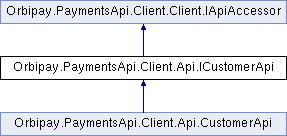
Public Member Functions | |
| ApiResponse< CustomerResponse > | CreateCustomer (string channel, string clientKey, string product, string timestamp, string idempotentRequestKey, string requestorType, string requestor, CreateCustomerRequest createCustomerRequest, string xOPAYHeaders=null, string traceId=null) |
| Create Customer More... | |
| ApiResponse< CustomerResponse > | CreateCustomerWithHttpInfo (string channel, string clientKey, string product, string timestamp, string idempotentRequestKey, string requestorType, string requestor, CreateCustomerRequest createCustomerRequest, string xOPAYHeaders=null, string traceId=null) |
| Create Customer More... | |
| ApiResponse< CustomerResponse > | GetCustomer (string channel, string clientKey, string product, string timestamp, string idempotentRequestKey, string requestorType, string requestor, string ID_CUSTOMER, string xOPAYHeaders=null, string traceId=null) |
| Get Customer More... | |
| ApiResponse< CustomerResponse > | GetCustomerWithHttpInfo (string channel, string clientKey, string product, string timestamp, string idempotentRequestKey, string requestorType, string requestor, string ID_CUSTOMER, string xOPAYHeaders=null, string traceId=null) |
| Get Customer More... | |
| ApiResponse< Object > | InitiateContactVerification (string channel, string clientKey, string product, string timestamp, string idempotentRequestKey, string requestorType, string requestor, InitiateContactVerificationRequest initiateContactVerificationRequest, string xOPAYHeaders=null, string traceId=null) |
| Initiate Contact Verification More... | |
| ApiResponse< Object > | InitiateContactVerificationWithHttpInfo (string channel, string clientKey, string product, string timestamp, string idempotentRequestKey, string requestorType, string requestor, InitiateContactVerificationRequest initiateContactVerificationRequest, string xOPAYHeaders=null, string traceId=null) |
| Initiate Contact Verification More... | |
| ApiResponse < CustomerContactResponse > | LinkCustomerContact (string channel, string clientKey, string product, string timestamp, string idempotentRequestKey, string requestorType, string requestor, LinkCustomerContactRequest linkCustomerContactRequest, string xOPAYHeaders=null, string traceId=null) |
| Link Customer Contact More... | |
| ApiResponse < CustomerContactResponse > | LinkCustomerContactWithHttpInfo (string channel, string clientKey, string product, string timestamp, string idempotentRequestKey, string requestorType, string requestor, LinkCustomerContactRequest linkCustomerContactRequest, string xOPAYHeaders=null, string traceId=null) |
| Link Customer Contact More... | |
| ApiResponse< CustomersResponse > | RetrieveCustomers (string channel, string clientKey, string product, string timestamp, string idempotentRequestKey, string requestorType, string requestor, string xOPAYHeaders=null, string traceId=null, string pageSize=null, string customerReference=null, string ssn=null, string email=null, string accountNumber=null) |
| Retrieve Customer More... | |
| ApiResponse< CustomersResponse > | RetrieveCustomersWithHttpInfo (string channel, string clientKey, string product, string timestamp, string idempotentRequestKey, string requestorType, string requestor, string xOPAYHeaders=null, string traceId=null, string pageSize=null, string customerReference=null, string ssn=null, string email=null, string accountNumber=null) |
| Retrieve Customer More... | |
| ApiResponse< Object > | UnlinkCustomerContact (string channel, string clientKey, string product, string timestamp, string idempotentRequestKey, string requestorType, string requestor, UnlinkCustomerContactRequest unlinkCustomerContactRequest, string xOPAYHeaders=null, string traceId=null) |
| Unlink Customer Contact More... | |
| ApiResponse< Object > | UnlinkCustomerContactWithHttpInfo (string channel, string clientKey, string product, string timestamp, string idempotentRequestKey, string requestorType, string requestor, UnlinkCustomerContactRequest unlinkCustomerContactRequest, string xOPAYHeaders=null, string traceId=null) |
| Unlink Customer Contact More... | |
| ApiResponse< CustomerResponse > | UpdateCustomer (string channel, string clientKey, string product, string timestamp, string idempotentRequestKey, string requestorType, string requestor, string ID_CUSTOMER, UpdateCustomerRequest updateCustomerRequest, string xOPAYHeaders=null, string traceId=null) |
| Update Customer More... | |
| ApiResponse< CustomerResponse > | UpdateCustomerWithHttpInfo (string channel, string clientKey, string product, string timestamp, string idempotentRequestKey, string requestorType, string requestor, string ID_CUSTOMER, UpdateCustomerRequest updateCustomerRequest, string xOPAYHeaders=null, string traceId=null) |
| Update Customer More... | |
| System.Threading.Tasks.Task < CustomerResponse > | CreateCustomerAsync (string channel, string clientKey, string product, string timestamp, string idempotentRequestKey, string requestorType, string requestor, CreateCustomerRequest createCustomerRequest, string xOPAYHeaders=null, string traceId=null) |
| Create Customer More... | |
| System.Threading.Tasks.Task < ApiResponse < CustomerResponse > > | CreateCustomerAsyncWithHttpInfo (string channel, string clientKey, string product, string timestamp, string idempotentRequestKey, string requestorType, string requestor, CreateCustomerRequest createCustomerRequest, string xOPAYHeaders=null, string traceId=null) |
| Create Customer More... | |
| System.Threading.Tasks.Task < CustomerResponse > | GetCustomerAsync (string channel, string clientKey, string product, string timestamp, string idempotentRequestKey, string requestorType, string requestor, string ID_CUSTOMER, string xOPAYHeaders=null, string traceId=null) |
| Get Customer More... | |
| System.Threading.Tasks.Task < ApiResponse < CustomerResponse > > | GetCustomerAsyncWithHttpInfo (string channel, string clientKey, string product, string timestamp, string idempotentRequestKey, string requestorType, string requestor, string ID_CUSTOMER, string xOPAYHeaders=null, string traceId=null) |
| Get Customer More... | |
| System.Threading.Tasks.Task | InitiateContactVerificationAsync (string channel, string clientKey, string product, string timestamp, string idempotentRequestKey, string requestorType, string requestor, InitiateContactVerificationRequest initiateContactVerificationRequest, string xOPAYHeaders=null, string traceId=null) |
| Initiate Contact Verification More... | |
| System.Threading.Tasks.Task < ApiResponse< Object > > | InitiateContactVerificationAsyncWithHttpInfo (string channel, string clientKey, string product, string timestamp, string idempotentRequestKey, string requestorType, string requestor, InitiateContactVerificationRequest initiateContactVerificationRequest, string xOPAYHeaders=null, string traceId=null) |
| Initiate Contact Verification More... | |
| System.Threading.Tasks.Task < CustomerContactResponse > | LinkCustomerContactAsync (string channel, string clientKey, string product, string timestamp, string idempotentRequestKey, string requestorType, string requestor, LinkCustomerContactRequest linkCustomerContactRequest, string xOPAYHeaders=null, string traceId=null) |
| Link Customer Contact More... | |
| System.Threading.Tasks.Task < ApiResponse < CustomerContactResponse > > | LinkCustomerContactAsyncWithHttpInfo (string channel, string clientKey, string product, string timestamp, string idempotentRequestKey, string requestorType, string requestor, LinkCustomerContactRequest linkCustomerContactRequest, string xOPAYHeaders=null, string traceId=null) |
| Link Customer Contact More... | |
| System.Threading.Tasks.Task < CustomersResponse > | RetrieveCustomersAsync (string channel, string clientKey, string product, string timestamp, string idempotentRequestKey, string requestorType, string requestor, string xOPAYHeaders=null, string traceId=null, string pageSize=null, string customerReference=null, string ssn=null, string email=null, string accountNumber=null) |
| Retrieve Customer More... | |
| System.Threading.Tasks.Task < ApiResponse < CustomersResponse > > | RetrieveCustomersAsyncWithHttpInfo (string channel, string clientKey, string product, string timestamp, string idempotentRequestKey, string requestorType, string requestor, string xOPAYHeaders=null, string traceId=null, string pageSize=null, string customerReference=null, string ssn=null, string email=null, string accountNumber=null) |
| Retrieve Customer More... | |
| System.Threading.Tasks.Task | UnlinkCustomerContactAsync (string channel, string clientKey, string product, string timestamp, string idempotentRequestKey, string requestorType, string requestor, UnlinkCustomerContactRequest unlinkCustomerContactRequest, string xOPAYHeaders=null, string traceId=null) |
| Unlink Customer Contact More... | |
| System.Threading.Tasks.Task < ApiResponse< Object > > | UnlinkCustomerContactAsyncWithHttpInfo (string channel, string clientKey, string product, string timestamp, string idempotentRequestKey, string requestorType, string requestor, UnlinkCustomerContactRequest unlinkCustomerContactRequest, string xOPAYHeaders=null, string traceId=null) |
| Unlink Customer Contact More... | |
| System.Threading.Tasks.Task < CustomerResponse > | UpdateCustomerAsync (string channel, string clientKey, string product, string timestamp, string idempotentRequestKey, string requestorType, string requestor, string ID_CUSTOMER, UpdateCustomerRequest updateCustomerRequest, string xOPAYHeaders=null, string traceId=null) |
| Update Customer More... | |
| System.Threading.Tasks.Task < ApiResponse < CustomerResponse > > | UpdateCustomerAsyncWithHttpInfo (string channel, string clientKey, string product, string timestamp, string idempotentRequestKey, string requestorType, string requestor, string ID_CUSTOMER, UpdateCustomerRequest updateCustomerRequest, string xOPAYHeaders=null, string traceId=null) |
| Update Customer More... | |
 Public Member Functions inherited from Orbipay.PaymentsApi.Client.Client.IApiAccessor Public Member Functions inherited from Orbipay.PaymentsApi.Client.Client.IApiAccessor | |
| String | GetBasePath () |
| Gets the base path of the API client. More... | |
Additional Inherited Members | |
| Properties inherited from Orbipay.PaymentsApi.Client.Client.IApiAccessor | |
| Configuration | Configuration [get, set] |
| Gets or sets the configuration object More... | |
| ExceptionFactory | ExceptionFactory [get, set] |
| Provides a factory method hook for the creation of exceptions. More... | |
| ApiResponse<CustomerResponse> Orbipay.PaymentsApi.Client.Api.ICustomerApi.CreateCustomer | ( | string | channel, |
| string | clientKey, | ||
| string | product, | ||
| string | timestamp, | ||
| string | idempotentRequestKey, | ||
| string | requestorType, | ||
| string | requestor, | ||
| CreateCustomerRequest | createCustomerRequest, | ||
| string | xOPAYHeaders = null, |
||
| string | traceId = null |
||
| ) |
Create Customer
The Create Customer API is used to register a customer with a biller in EBPP. It is also mandatory to create a customer account for the customer. So, at least one customer account should be provided in order to register a customer. There is no limit on the number of accounts that can be associated with the customer. Either first_name or last_name is required to create a customer.
| Orbipay.PaymentsApi.Client.Client.ApiException | Thrown when fails to make API call |
| channel | The channel through which the API is invoked. |
| clientKey | The unique identifier assigned by EBPP to the client. |
| product | The product identifier corresponding to the API. |
| timestamp | The timestamp for the moment when the API request is created. |
| idempotentRequestKey | The unique token that clients can generate and maintain in order to identify an API request. |
| requestorType | Type of the requestor of the API. |
| requestor | The identifier for the requestor of the API, in EBPP. The value to be passed in the requestor field would depend on the requestor_type. If the requestor_type is "customer", the requestor should be “guest”. This is typically used in the case of self registration, where there is no EBPP generated customer id yet. If the requestor_type is "external_user", the requestor can be any unique identifier that the client may have for the external agent. |
| createCustomerRequest | The JSON that contains all the attributes of customer to be created. |
| xOPAYHeaders | Intended for the future use. (optional) |
| traceId | The unique reference that can be used for tracing and debugging an API call. (optional) |
Implemented in Orbipay.PaymentsApi.Client.Api.CustomerApi.
| System.Threading.Tasks.Task<CustomerResponse> Orbipay.PaymentsApi.Client.Api.ICustomerApi.CreateCustomerAsync | ( | string | channel, |
| string | clientKey, | ||
| string | product, | ||
| string | timestamp, | ||
| string | idempotentRequestKey, | ||
| string | requestorType, | ||
| string | requestor, | ||
| CreateCustomerRequest | createCustomerRequest, | ||
| string | xOPAYHeaders = null, |
||
| string | traceId = null |
||
| ) |
Create Customer
The Create Customer API is used to register a customer with a biller in EBPP. It is also mandatory to create a customer account for the customer. So, at least one customer account should be provided in order to register a customer. There is no limit on the number of accounts that can be associated with the customer. Either first_name or last_name is required to create a customer.
| Orbipay.PaymentsApi.Client.Client.ApiException | Thrown when fails to make API call |
| channel | The channel through which the API is invoked. |
| clientKey | The unique identifier assigned by EBPP to the client. |
| product | The product identifier corresponding to the API. |
| timestamp | The timestamp for the moment when the API request is created. |
| idempotentRequestKey | The unique token that clients can generate and maintain in order to identify an API request. |
| requestorType | Type of the requestor of the API. |
| requestor | The identifier for the requestor of the API, in EBPP. The value to be passed in the requestor field would depend on the requestor_type. If the requestor_type is "customer", the requestor should be “guest”. This is typically used in the case of self registration, where there is no EBPP generated customer id yet. If the requestor_type is "external_user", the requestor can be any unique identifier that the client may have for the external agent. |
| createCustomerRequest | The JSON that contains all the attributes of customer to be created. |
| xOPAYHeaders | Intended for the future use. (optional) |
| traceId | The unique reference that can be used for tracing and debugging an API call. (optional) |
Implemented in Orbipay.PaymentsApi.Client.Api.CustomerApi.
| System.Threading.Tasks.Task<ApiResponse<CustomerResponse> > Orbipay.PaymentsApi.Client.Api.ICustomerApi.CreateCustomerAsyncWithHttpInfo | ( | string | channel, |
| string | clientKey, | ||
| string | product, | ||
| string | timestamp, | ||
| string | idempotentRequestKey, | ||
| string | requestorType, | ||
| string | requestor, | ||
| CreateCustomerRequest | createCustomerRequest, | ||
| string | xOPAYHeaders = null, |
||
| string | traceId = null |
||
| ) |
Create Customer
The Create Customer API is used to register a customer with a biller in EBPP. It is also mandatory to create a customer account for the customer. So, at least one customer account should be provided in order to register a customer. There is no limit on the number of accounts that can be associated with the customer. Either first_name or last_name is required to create a customer.
| Orbipay.PaymentsApi.Client.Client.ApiException | Thrown when fails to make API call |
| channel | The channel through which the API is invoked. |
| clientKey | The unique identifier assigned by EBPP to the client. |
| product | The product identifier corresponding to the API. |
| timestamp | The timestamp for the moment when the API request is created. |
| idempotentRequestKey | The unique token that clients can generate and maintain in order to identify an API request. |
| requestorType | Type of the requestor of the API. |
| requestor | The identifier for the requestor of the API, in EBPP. The value to be passed in the requestor field would depend on the requestor_type. If the requestor_type is "customer", the requestor should be “guest”. This is typically used in the case of self registration, where there is no EBPP generated customer id yet. If the requestor_type is "external_user", the requestor can be any unique identifier that the client may have for the external agent. |
| createCustomerRequest | The JSON that contains all the attributes of customer to be created. |
| xOPAYHeaders | Intended for the future use. (optional) |
| traceId | The unique reference that can be used for tracing and debugging an API call. (optional) |
Implemented in Orbipay.PaymentsApi.Client.Api.CustomerApi.
| ApiResponse<CustomerResponse> Orbipay.PaymentsApi.Client.Api.ICustomerApi.CreateCustomerWithHttpInfo | ( | string | channel, |
| string | clientKey, | ||
| string | product, | ||
| string | timestamp, | ||
| string | idempotentRequestKey, | ||
| string | requestorType, | ||
| string | requestor, | ||
| CreateCustomerRequest | createCustomerRequest, | ||
| string | xOPAYHeaders = null, |
||
| string | traceId = null |
||
| ) |
Create Customer
The Create Customer API is used to register a customer with a biller in EBPP. It is also mandatory to create a customer account for the customer. So, at least one customer account should be provided in order to register a customer. There is no limit on the number of accounts that can be associated with the customer. Either first_name or last_name is required to create a customer.
| Orbipay.PaymentsApi.Client.Client.ApiException | Thrown when fails to make API call |
| channel | The channel through which the API is invoked. |
| clientKey | The unique identifier assigned by EBPP to the client. |
| product | The product identifier corresponding to the API. |
| timestamp | The timestamp for the moment when the API request is created. |
| idempotentRequestKey | The unique token that clients can generate and maintain in order to identify an API request. |
| requestorType | Type of the requestor of the API. |
| requestor | The identifier for the requestor of the API, in EBPP. The value to be passed in the requestor field would depend on the requestor_type. If the requestor_type is "customer", the requestor should be “guest”. This is typically used in the case of self registration, where there is no EBPP generated customer id yet. If the requestor_type is "external_user", the requestor can be any unique identifier that the client may have for the external agent. |
| createCustomerRequest | The JSON that contains all the attributes of customer to be created. |
| xOPAYHeaders | Intended for the future use. (optional) |
| traceId | The unique reference that can be used for tracing and debugging an API call. (optional) |
Implemented in Orbipay.PaymentsApi.Client.Api.CustomerApi.
| ApiResponse<CustomerResponse> Orbipay.PaymentsApi.Client.Api.ICustomerApi.GetCustomer | ( | string | channel, |
| string | clientKey, | ||
| string | product, | ||
| string | timestamp, | ||
| string | idempotentRequestKey, | ||
| string | requestorType, | ||
| string | requestor, | ||
| string | ID_CUSTOMER, | ||
| string | xOPAYHeaders = null, |
||
| string | traceId = null |
||
| ) |
Get Customer
The Get Customer API is used to retrieve the details of the customer based on the id.
| Orbipay.PaymentsApi.Client.Client.ApiException | Thrown when fails to make API call |
| channel | The channel through which the API is invoked. |
| clientKey | The unique identifier assigned by EBPP to the client. |
| product | The product identifier corresponding to the API. |
| timestamp | The timestamp for the moment when the API request is created. |
| idempotentRequestKey | The unique token that clients can generate and maintain in order to identify an API request. |
| requestorType | Type of the requestor of the API. |
| requestor | The identifier for the requestor of the API. |
| ID_CUSTOMER | The unique identifier assigned by EBPP to the customer. |
| xOPAYHeaders | Intended for the future use. (optional) |
| traceId | The unique reference that can be used for tracing and debugging an API call. (optional) |
Implemented in Orbipay.PaymentsApi.Client.Api.CustomerApi.
| System.Threading.Tasks.Task<CustomerResponse> Orbipay.PaymentsApi.Client.Api.ICustomerApi.GetCustomerAsync | ( | string | channel, |
| string | clientKey, | ||
| string | product, | ||
| string | timestamp, | ||
| string | idempotentRequestKey, | ||
| string | requestorType, | ||
| string | requestor, | ||
| string | ID_CUSTOMER, | ||
| string | xOPAYHeaders = null, |
||
| string | traceId = null |
||
| ) |
Get Customer
The Get Customer API is used to retrieve the details of the customer based on the id.
| Orbipay.PaymentsApi.Client.Client.ApiException | Thrown when fails to make API call |
| channel | The channel through which the API is invoked. |
| clientKey | The unique identifier assigned by EBPP to the client. |
| product | The product identifier corresponding to the API. |
| timestamp | The timestamp for the moment when the API request is created. |
| idempotentRequestKey | The unique token that clients can generate and maintain in order to identify an API request. |
| requestorType | Type of the requestor of the API. |
| requestor | The identifier for the requestor of the API. |
| ID_CUSTOMER | The unique identifier assigned by EBPP to the customer. |
| xOPAYHeaders | Intended for the future use. (optional) |
| traceId | The unique reference that can be used for tracing and debugging an API call. (optional) |
Implemented in Orbipay.PaymentsApi.Client.Api.CustomerApi.
| System.Threading.Tasks.Task<ApiResponse<CustomerResponse> > Orbipay.PaymentsApi.Client.Api.ICustomerApi.GetCustomerAsyncWithHttpInfo | ( | string | channel, |
| string | clientKey, | ||
| string | product, | ||
| string | timestamp, | ||
| string | idempotentRequestKey, | ||
| string | requestorType, | ||
| string | requestor, | ||
| string | ID_CUSTOMER, | ||
| string | xOPAYHeaders = null, |
||
| string | traceId = null |
||
| ) |
Get Customer
The Get Customer API is used to retrieve the details of the customer based on the id.
| Orbipay.PaymentsApi.Client.Client.ApiException | Thrown when fails to make API call |
| channel | The channel through which the API is invoked. |
| clientKey | The unique identifier assigned by EBPP to the client. |
| product | The product identifier corresponding to the API. |
| timestamp | The timestamp for the moment when the API request is created. |
| idempotentRequestKey | The unique token that clients can generate and maintain in order to identify an API request. |
| requestorType | Type of the requestor of the API. |
| requestor | The identifier for the requestor of the API. |
| ID_CUSTOMER | The unique identifier assigned by EBPP to the customer. |
| xOPAYHeaders | Intended for the future use. (optional) |
| traceId | The unique reference that can be used for tracing and debugging an API call. (optional) |
Implemented in Orbipay.PaymentsApi.Client.Api.CustomerApi.
| ApiResponse<CustomerResponse> Orbipay.PaymentsApi.Client.Api.ICustomerApi.GetCustomerWithHttpInfo | ( | string | channel, |
| string | clientKey, | ||
| string | product, | ||
| string | timestamp, | ||
| string | idempotentRequestKey, | ||
| string | requestorType, | ||
| string | requestor, | ||
| string | ID_CUSTOMER, | ||
| string | xOPAYHeaders = null, |
||
| string | traceId = null |
||
| ) |
Get Customer
The Get Customer API is used to retrieve the details of the customer based on the id.
| Orbipay.PaymentsApi.Client.Client.ApiException | Thrown when fails to make API call |
| channel | The channel through which the API is invoked. |
| clientKey | The unique identifier assigned by EBPP to the client. |
| product | The product identifier corresponding to the API. |
| timestamp | The timestamp for the moment when the API request is created. |
| idempotentRequestKey | The unique token that clients can generate and maintain in order to identify an API request. |
| requestorType | Type of the requestor of the API. |
| requestor | The identifier for the requestor of the API. |
| ID_CUSTOMER | The unique identifier assigned by EBPP to the customer. |
| xOPAYHeaders | Intended for the future use. (optional) |
| traceId | The unique reference that can be used for tracing and debugging an API call. (optional) |
Implemented in Orbipay.PaymentsApi.Client.Api.CustomerApi.
| ApiResponse<Object> Orbipay.PaymentsApi.Client.Api.ICustomerApi.InitiateContactVerification | ( | string | channel, |
| string | clientKey, | ||
| string | product, | ||
| string | timestamp, | ||
| string | idempotentRequestKey, | ||
| string | requestorType, | ||
| string | requestor, | ||
| InitiateContactVerificationRequest | initiateContactVerificationRequest, | ||
| string | xOPAYHeaders = null, |
||
| string | traceId = null |
||
| ) |
Initiate Contact Verification
This API generates a verification code for the specified phone number of a given customer.
| Orbipay.PaymentsApi.Client.Client.ApiException | Thrown when fails to make API call |
| channel | The channel through which the API is invoked. |
| clientKey | The unique identifier assigned by EBPP to the client. |
| product | The product identifier corresponding to the API. |
| timestamp | The timestamp for the moment when the API request is created. |
| idempotentRequestKey | The unique token that clients can generate and maintain in order to identify an API request. |
| requestorType | Type of the requestor of the API. |
| requestor | The identifier for the requestor of the API. |
| initiateContactVerificationRequest | JSON containing all the fields required to Initiate Contact Verification. |
| xOPAYHeaders | Intended for the future use. (optional) |
| traceId | The unique reference that can be used for tracing and debugging an API call. (optional) |
Implemented in Orbipay.PaymentsApi.Client.Api.CustomerApi.
| System.Threading.Tasks.Task Orbipay.PaymentsApi.Client.Api.ICustomerApi.InitiateContactVerificationAsync | ( | string | channel, |
| string | clientKey, | ||
| string | product, | ||
| string | timestamp, | ||
| string | idempotentRequestKey, | ||
| string | requestorType, | ||
| string | requestor, | ||
| InitiateContactVerificationRequest | initiateContactVerificationRequest, | ||
| string | xOPAYHeaders = null, |
||
| string | traceId = null |
||
| ) |
Initiate Contact Verification
This API generates a verification code for the specified phone number of a given customer.
| Orbipay.PaymentsApi.Client.Client.ApiException | Thrown when fails to make API call |
| channel | The channel through which the API is invoked. |
| clientKey | The unique identifier assigned by EBPP to the client. |
| product | The product identifier corresponding to the API. |
| timestamp | The timestamp for the moment when the API request is created. |
| idempotentRequestKey | The unique token that clients can generate and maintain in order to identify an API request. |
| requestorType | Type of the requestor of the API. |
| requestor | The identifier for the requestor of the API. |
| initiateContactVerificationRequest | JSON containing all the fields required to Initiate Contact Verification. |
| xOPAYHeaders | Intended for the future use. (optional) |
| traceId | The unique reference that can be used for tracing and debugging an API call. (optional) |
Implemented in Orbipay.PaymentsApi.Client.Api.CustomerApi.
| System.Threading.Tasks.Task<ApiResponse<Object> > Orbipay.PaymentsApi.Client.Api.ICustomerApi.InitiateContactVerificationAsyncWithHttpInfo | ( | string | channel, |
| string | clientKey, | ||
| string | product, | ||
| string | timestamp, | ||
| string | idempotentRequestKey, | ||
| string | requestorType, | ||
| string | requestor, | ||
| InitiateContactVerificationRequest | initiateContactVerificationRequest, | ||
| string | xOPAYHeaders = null, |
||
| string | traceId = null |
||
| ) |
Initiate Contact Verification
This API generates a verification code for the specified phone number of a given customer.
| Orbipay.PaymentsApi.Client.Client.ApiException | Thrown when fails to make API call |
| channel | The channel through which the API is invoked. |
| clientKey | The unique identifier assigned by EBPP to the client. |
| product | The product identifier corresponding to the API. |
| timestamp | The timestamp for the moment when the API request is created. |
| idempotentRequestKey | The unique token that clients can generate and maintain in order to identify an API request. |
| requestorType | Type of the requestor of the API. |
| requestor | The identifier for the requestor of the API. |
| initiateContactVerificationRequest | JSON containing all the fields required to Initiate Contact Verification. |
| xOPAYHeaders | Intended for the future use. (optional) |
| traceId | The unique reference that can be used for tracing and debugging an API call. (optional) |
Implemented in Orbipay.PaymentsApi.Client.Api.CustomerApi.
| ApiResponse<Object> Orbipay.PaymentsApi.Client.Api.ICustomerApi.InitiateContactVerificationWithHttpInfo | ( | string | channel, |
| string | clientKey, | ||
| string | product, | ||
| string | timestamp, | ||
| string | idempotentRequestKey, | ||
| string | requestorType, | ||
| string | requestor, | ||
| InitiateContactVerificationRequest | initiateContactVerificationRequest, | ||
| string | xOPAYHeaders = null, |
||
| string | traceId = null |
||
| ) |
Initiate Contact Verification
This API generates a verification code for the specified phone number of a given customer.
| Orbipay.PaymentsApi.Client.Client.ApiException | Thrown when fails to make API call |
| channel | The channel through which the API is invoked. |
| clientKey | The unique identifier assigned by EBPP to the client. |
| product | The product identifier corresponding to the API. |
| timestamp | The timestamp for the moment when the API request is created. |
| idempotentRequestKey | The unique token that clients can generate and maintain in order to identify an API request. |
| requestorType | Type of the requestor of the API. |
| requestor | The identifier for the requestor of the API. |
| initiateContactVerificationRequest | JSON containing all the fields required to Initiate Contact Verification. |
| xOPAYHeaders | Intended for the future use. (optional) |
| traceId | The unique reference that can be used for tracing and debugging an API call. (optional) |
Implemented in Orbipay.PaymentsApi.Client.Api.CustomerApi.
| ApiResponse<CustomerContactResponse> Orbipay.PaymentsApi.Client.Api.ICustomerApi.LinkCustomerContact | ( | string | channel, |
| string | clientKey, | ||
| string | product, | ||
| string | timestamp, | ||
| string | idempotentRequestKey, | ||
| string | requestorType, | ||
| string | requestor, | ||
| LinkCustomerContactRequest | linkCustomerContactRequest, | ||
| string | xOPAYHeaders = null, |
||
| string | traceId = null |
||
| ) |
Link Customer Contact
This API is used to link a customer's contact information to their existing account. The API takes a request body containing the customer's unique identifier and the contact information to be linked. It should be noted that for a specific contact type, such as email or sms, only one contact can be linked per customer.
| Orbipay.PaymentsApi.Client.Client.ApiException | Thrown when fails to make API call |
| channel | The channel through which the API is invoked. |
| clientKey | The unique identifier assigned by EBPP to the client. |
| product | The product identifier corresponding to the API. |
| timestamp | The timestamp for the moment when the API request is created. |
| idempotentRequestKey | The unique token that clients can generate and maintain in order to identify an API request. |
| requestorType | Type of the requestor of the API. |
| requestor | The identifier for the requestor of the API. |
| linkCustomerContactRequest | JSON containing all the fields required to link a contact to customer. |
| xOPAYHeaders | Intended for the future use. (optional) |
| traceId | The unique reference that can be used for tracing and debugging an API call. (optional) |
Implemented in Orbipay.PaymentsApi.Client.Api.CustomerApi.
| System.Threading.Tasks.Task<CustomerContactResponse> Orbipay.PaymentsApi.Client.Api.ICustomerApi.LinkCustomerContactAsync | ( | string | channel, |
| string | clientKey, | ||
| string | product, | ||
| string | timestamp, | ||
| string | idempotentRequestKey, | ||
| string | requestorType, | ||
| string | requestor, | ||
| LinkCustomerContactRequest | linkCustomerContactRequest, | ||
| string | xOPAYHeaders = null, |
||
| string | traceId = null |
||
| ) |
Link Customer Contact
This API is used to link a customer's contact information to their existing account. The API takes a request body containing the customer's unique identifier and the contact information to be linked. It should be noted that for a specific contact type, such as email or sms, only one contact can be linked per customer.
| Orbipay.PaymentsApi.Client.Client.ApiException | Thrown when fails to make API call |
| channel | The channel through which the API is invoked. |
| clientKey | The unique identifier assigned by EBPP to the client. |
| product | The product identifier corresponding to the API. |
| timestamp | The timestamp for the moment when the API request is created. |
| idempotentRequestKey | The unique token that clients can generate and maintain in order to identify an API request. |
| requestorType | Type of the requestor of the API. |
| requestor | The identifier for the requestor of the API. |
| linkCustomerContactRequest | JSON containing all the fields required to link a contact to customer. |
| xOPAYHeaders | Intended for the future use. (optional) |
| traceId | The unique reference that can be used for tracing and debugging an API call. (optional) |
Implemented in Orbipay.PaymentsApi.Client.Api.CustomerApi.
| System.Threading.Tasks.Task<ApiResponse<CustomerContactResponse> > Orbipay.PaymentsApi.Client.Api.ICustomerApi.LinkCustomerContactAsyncWithHttpInfo | ( | string | channel, |
| string | clientKey, | ||
| string | product, | ||
| string | timestamp, | ||
| string | idempotentRequestKey, | ||
| string | requestorType, | ||
| string | requestor, | ||
| LinkCustomerContactRequest | linkCustomerContactRequest, | ||
| string | xOPAYHeaders = null, |
||
| string | traceId = null |
||
| ) |
Link Customer Contact
This API is used to link a customer's contact information to their existing account. The API takes a request body containing the customer's unique identifier and the contact information to be linked. It should be noted that for a specific contact type, such as email or sms, only one contact can be linked per customer.
| Orbipay.PaymentsApi.Client.Client.ApiException | Thrown when fails to make API call |
| channel | The channel through which the API is invoked. |
| clientKey | The unique identifier assigned by EBPP to the client. |
| product | The product identifier corresponding to the API. |
| timestamp | The timestamp for the moment when the API request is created. |
| idempotentRequestKey | The unique token that clients can generate and maintain in order to identify an API request. |
| requestorType | Type of the requestor of the API. |
| requestor | The identifier for the requestor of the API. |
| linkCustomerContactRequest | JSON containing all the fields required to link a contact to customer. |
| xOPAYHeaders | Intended for the future use. (optional) |
| traceId | The unique reference that can be used for tracing and debugging an API call. (optional) |
Implemented in Orbipay.PaymentsApi.Client.Api.CustomerApi.
| ApiResponse<CustomerContactResponse> Orbipay.PaymentsApi.Client.Api.ICustomerApi.LinkCustomerContactWithHttpInfo | ( | string | channel, |
| string | clientKey, | ||
| string | product, | ||
| string | timestamp, | ||
| string | idempotentRequestKey, | ||
| string | requestorType, | ||
| string | requestor, | ||
| LinkCustomerContactRequest | linkCustomerContactRequest, | ||
| string | xOPAYHeaders = null, |
||
| string | traceId = null |
||
| ) |
Link Customer Contact
This API is used to link a customer's contact information to their existing account. The API takes a request body containing the customer's unique identifier and the contact information to be linked. It should be noted that for a specific contact type, such as email or sms, only one contact can be linked per customer.
| Orbipay.PaymentsApi.Client.Client.ApiException | Thrown when fails to make API call |
| channel | The channel through which the API is invoked. |
| clientKey | The unique identifier assigned by EBPP to the client. |
| product | The product identifier corresponding to the API. |
| timestamp | The timestamp for the moment when the API request is created. |
| idempotentRequestKey | The unique token that clients can generate and maintain in order to identify an API request. |
| requestorType | Type of the requestor of the API. |
| requestor | The identifier for the requestor of the API. |
| linkCustomerContactRequest | JSON containing all the fields required to link a contact to customer. |
| xOPAYHeaders | Intended for the future use. (optional) |
| traceId | The unique reference that can be used for tracing and debugging an API call. (optional) |
Implemented in Orbipay.PaymentsApi.Client.Api.CustomerApi.
| ApiResponse<CustomersResponse> Orbipay.PaymentsApi.Client.Api.ICustomerApi.RetrieveCustomers | ( | string | channel, |
| string | clientKey, | ||
| string | product, | ||
| string | timestamp, | ||
| string | idempotentRequestKey, | ||
| string | requestorType, | ||
| string | requestor, | ||
| string | xOPAYHeaders = null, |
||
| string | traceId = null, |
||
| string | pageSize = null, |
||
| string | customerReference = null, |
||
| string | ssn = null, |
||
| string | email = null, |
||
| string | accountNumber = null |
||
| ) |
Retrieve Customer
This API is used to retrieve/lookup customers from EBPP. Customers can be retrieved matching criteria that includes the customer_reference, the ssn, the email or the customer account number. A unique customer can be retrieved by using search criteria as per the customer uniqueness parameters opted by the client/biller. If the requestor_type is customer, the Retrieve Customer API will return an error if it cannot retrieve a unique customer.
| Orbipay.PaymentsApi.Client.Client.ApiException | Thrown when fails to make API call |
| channel | The channel through which the API is invoked. |
| clientKey | The unique identifier assigned by EBPP to the client. |
| product | The product identifier corresponding to the API. |
| timestamp | The timestamp for the moment when the API request is created. |
| idempotentRequestKey | The unique token that clients can generate and maintain in order to identify an API request. |
| requestorType | Type of the requestor of the API. |
| requestor | The identifier for the requestor of the API, in EBPP. The value to be passed in the requestor field would depend on the requestor_type. If the requestor_type is "customer", the requestor should be set to ''guest''. If the requestor_type is "external_user", the requestor can be any unique identifier that the client may have for the external agent. |
| xOPAYHeaders | Intended for the future use. (optional) |
| traceId | The unique reference that can be used for tracing and debugging an API call. (optional) |
| pageSize | The maximum number of objects returned in the query. (optional) |
| customerReference | Unique ID assigned by the biller/client system for a given customer. (optional) |
| ssn | The SSN of the customer if the account holder is an individual or the tax ID, if the customer is a business. (optional) |
| This field contains the customer’s email address within EBPP. (optional) | |
| accountNumber | Customer Account Number of the customer to get details of. (optional) |
Implemented in Orbipay.PaymentsApi.Client.Api.CustomerApi.
| System.Threading.Tasks.Task<CustomersResponse> Orbipay.PaymentsApi.Client.Api.ICustomerApi.RetrieveCustomersAsync | ( | string | channel, |
| string | clientKey, | ||
| string | product, | ||
| string | timestamp, | ||
| string | idempotentRequestKey, | ||
| string | requestorType, | ||
| string | requestor, | ||
| string | xOPAYHeaders = null, |
||
| string | traceId = null, |
||
| string | pageSize = null, |
||
| string | customerReference = null, |
||
| string | ssn = null, |
||
| string | email = null, |
||
| string | accountNumber = null |
||
| ) |
Retrieve Customer
This API is used to retrieve/lookup customers from EBPP. Customers can be retrieved matching criteria that includes the customer_reference, the ssn, the email or the customer account number. A unique customer can be retrieved by using search criteria as per the customer uniqueness parameters opted by the client/biller. If the requestor_type is customer, the Retrieve Customer API will return an error if it cannot retrieve a unique customer.
| Orbipay.PaymentsApi.Client.Client.ApiException | Thrown when fails to make API call |
| channel | The channel through which the API is invoked. |
| clientKey | The unique identifier assigned by EBPP to the client. |
| product | The product identifier corresponding to the API. |
| timestamp | The timestamp for the moment when the API request is created. |
| idempotentRequestKey | The unique token that clients can generate and maintain in order to identify an API request. |
| requestorType | Type of the requestor of the API. |
| requestor | The identifier for the requestor of the API, in EBPP. The value to be passed in the requestor field would depend on the requestor_type. If the requestor_type is "customer", the requestor should be set to ''guest''. If the requestor_type is "external_user", the requestor can be any unique identifier that the client may have for the external agent. |
| xOPAYHeaders | Intended for the future use. (optional) |
| traceId | The unique reference that can be used for tracing and debugging an API call. (optional) |
| pageSize | The maximum number of objects returned in the query. (optional) |
| customerReference | Unique ID assigned by the biller/client system for a given customer. (optional) |
| ssn | The SSN of the customer if the account holder is an individual or the tax ID, if the customer is a business. (optional) |
| This field contains the customer’s email address within EBPP. (optional) | |
| accountNumber | Customer Account Number of the customer to get details of. (optional) |
Implemented in Orbipay.PaymentsApi.Client.Api.CustomerApi.
| System.Threading.Tasks.Task<ApiResponse<CustomersResponse> > Orbipay.PaymentsApi.Client.Api.ICustomerApi.RetrieveCustomersAsyncWithHttpInfo | ( | string | channel, |
| string | clientKey, | ||
| string | product, | ||
| string | timestamp, | ||
| string | idempotentRequestKey, | ||
| string | requestorType, | ||
| string | requestor, | ||
| string | xOPAYHeaders = null, |
||
| string | traceId = null, |
||
| string | pageSize = null, |
||
| string | customerReference = null, |
||
| string | ssn = null, |
||
| string | email = null, |
||
| string | accountNumber = null |
||
| ) |
Retrieve Customer
This API is used to retrieve/lookup customers from EBPP. Customers can be retrieved matching criteria that includes the customer_reference, the ssn, the email or the customer account number. A unique customer can be retrieved by using search criteria as per the customer uniqueness parameters opted by the client/biller. If the requestor_type is customer, the Retrieve Customer API will return an error if it cannot retrieve a unique customer.
| Orbipay.PaymentsApi.Client.Client.ApiException | Thrown when fails to make API call |
| channel | The channel through which the API is invoked. |
| clientKey | The unique identifier assigned by EBPP to the client. |
| product | The product identifier corresponding to the API. |
| timestamp | The timestamp for the moment when the API request is created. |
| idempotentRequestKey | The unique token that clients can generate and maintain in order to identify an API request. |
| requestorType | Type of the requestor of the API. |
| requestor | The identifier for the requestor of the API, in EBPP. The value to be passed in the requestor field would depend on the requestor_type. If the requestor_type is "customer", the requestor should be set to ''guest''. If the requestor_type is "external_user", the requestor can be any unique identifier that the client may have for the external agent. |
| xOPAYHeaders | Intended for the future use. (optional) |
| traceId | The unique reference that can be used for tracing and debugging an API call. (optional) |
| pageSize | The maximum number of objects returned in the query. (optional) |
| customerReference | Unique ID assigned by the biller/client system for a given customer. (optional) |
| ssn | The SSN of the customer if the account holder is an individual or the tax ID, if the customer is a business. (optional) |
| This field contains the customer’s email address within EBPP. (optional) | |
| accountNumber | Customer Account Number of the customer to get details of. (optional) |
Implemented in Orbipay.PaymentsApi.Client.Api.CustomerApi.
| ApiResponse<CustomersResponse> Orbipay.PaymentsApi.Client.Api.ICustomerApi.RetrieveCustomersWithHttpInfo | ( | string | channel, |
| string | clientKey, | ||
| string | product, | ||
| string | timestamp, | ||
| string | idempotentRequestKey, | ||
| string | requestorType, | ||
| string | requestor, | ||
| string | xOPAYHeaders = null, |
||
| string | traceId = null, |
||
| string | pageSize = null, |
||
| string | customerReference = null, |
||
| string | ssn = null, |
||
| string | email = null, |
||
| string | accountNumber = null |
||
| ) |
Retrieve Customer
This API is used to retrieve/lookup customers from EBPP. Customers can be retrieved matching criteria that includes the customer_reference, the ssn, the email or the customer account number. A unique customer can be retrieved by using search criteria as per the customer uniqueness parameters opted by the client/biller. If the requestor_type is customer, the Retrieve Customer API will return an error if it cannot retrieve a unique customer.
| Orbipay.PaymentsApi.Client.Client.ApiException | Thrown when fails to make API call |
| channel | The channel through which the API is invoked. |
| clientKey | The unique identifier assigned by EBPP to the client. |
| product | The product identifier corresponding to the API. |
| timestamp | The timestamp for the moment when the API request is created. |
| idempotentRequestKey | The unique token that clients can generate and maintain in order to identify an API request. |
| requestorType | Type of the requestor of the API. |
| requestor | The identifier for the requestor of the API, in EBPP. The value to be passed in the requestor field would depend on the requestor_type. If the requestor_type is "customer", the requestor should be set to ''guest''. If the requestor_type is "external_user", the requestor can be any unique identifier that the client may have for the external agent. |
| xOPAYHeaders | Intended for the future use. (optional) |
| traceId | The unique reference that can be used for tracing and debugging an API call. (optional) |
| pageSize | The maximum number of objects returned in the query. (optional) |
| customerReference | Unique ID assigned by the biller/client system for a given customer. (optional) |
| ssn | The SSN of the customer if the account holder is an individual or the tax ID, if the customer is a business. (optional) |
| This field contains the customer’s email address within EBPP. (optional) | |
| accountNumber | Customer Account Number of the customer to get details of. (optional) |
Implemented in Orbipay.PaymentsApi.Client.Api.CustomerApi.
| ApiResponse<Object> Orbipay.PaymentsApi.Client.Api.ICustomerApi.UnlinkCustomerContact | ( | string | channel, |
| string | clientKey, | ||
| string | product, | ||
| string | timestamp, | ||
| string | idempotentRequestKey, | ||
| string | requestorType, | ||
| string | requestor, | ||
| UnlinkCustomerContactRequest | unlinkCustomerContactRequest, | ||
| string | xOPAYHeaders = null, |
||
| string | traceId = null |
||
| ) |
Unlink Customer Contact
This API is used to unlink a customer's contact information from their account. The API takes a request body containing the customer's unique identifier and the contact information to be unlinked.
| Orbipay.PaymentsApi.Client.Client.ApiException | Thrown when fails to make API call |
| channel | The channel through which the API is invoked. |
| clientKey | The unique identifier assigned by EBPP to the client. |
| product | The product identifier corresponding to the API. |
| timestamp | The timestamp for the moment when the API request is created. |
| idempotentRequestKey | The unique token that clients can generate and maintain in order to identify an API request. |
| requestorType | Type of the requestor of the API. |
| requestor | The identifier for the requestor of the API. |
| unlinkCustomerContactRequest | JSON containing all the fields required to unlink a contact from the customer. |
| xOPAYHeaders | Intended for the future use. (optional) |
| traceId | The unique reference that can be used for tracing and debugging an API call. (optional) |
Implemented in Orbipay.PaymentsApi.Client.Api.CustomerApi.
| System.Threading.Tasks.Task Orbipay.PaymentsApi.Client.Api.ICustomerApi.UnlinkCustomerContactAsync | ( | string | channel, |
| string | clientKey, | ||
| string | product, | ||
| string | timestamp, | ||
| string | idempotentRequestKey, | ||
| string | requestorType, | ||
| string | requestor, | ||
| UnlinkCustomerContactRequest | unlinkCustomerContactRequest, | ||
| string | xOPAYHeaders = null, |
||
| string | traceId = null |
||
| ) |
Unlink Customer Contact
This API is used to unlink a customer's contact information from their account. The API takes a request body containing the customer's unique identifier and the contact information to be unlinked.
| Orbipay.PaymentsApi.Client.Client.ApiException | Thrown when fails to make API call |
| channel | The channel through which the API is invoked. |
| clientKey | The unique identifier assigned by EBPP to the client. |
| product | The product identifier corresponding to the API. |
| timestamp | The timestamp for the moment when the API request is created. |
| idempotentRequestKey | The unique token that clients can generate and maintain in order to identify an API request. |
| requestorType | Type of the requestor of the API. |
| requestor | The identifier for the requestor of the API. |
| unlinkCustomerContactRequest | JSON containing all the fields required to unlink a contact from the customer. |
| xOPAYHeaders | Intended for the future use. (optional) |
| traceId | The unique reference that can be used for tracing and debugging an API call. (optional) |
Implemented in Orbipay.PaymentsApi.Client.Api.CustomerApi.
| System.Threading.Tasks.Task<ApiResponse<Object> > Orbipay.PaymentsApi.Client.Api.ICustomerApi.UnlinkCustomerContactAsyncWithHttpInfo | ( | string | channel, |
| string | clientKey, | ||
| string | product, | ||
| string | timestamp, | ||
| string | idempotentRequestKey, | ||
| string | requestorType, | ||
| string | requestor, | ||
| UnlinkCustomerContactRequest | unlinkCustomerContactRequest, | ||
| string | xOPAYHeaders = null, |
||
| string | traceId = null |
||
| ) |
Unlink Customer Contact
This API is used to unlink a customer's contact information from their account. The API takes a request body containing the customer's unique identifier and the contact information to be unlinked.
| Orbipay.PaymentsApi.Client.Client.ApiException | Thrown when fails to make API call |
| channel | The channel through which the API is invoked. |
| clientKey | The unique identifier assigned by EBPP to the client. |
| product | The product identifier corresponding to the API. |
| timestamp | The timestamp for the moment when the API request is created. |
| idempotentRequestKey | The unique token that clients can generate and maintain in order to identify an API request. |
| requestorType | Type of the requestor of the API. |
| requestor | The identifier for the requestor of the API. |
| unlinkCustomerContactRequest | JSON containing all the fields required to unlink a contact from the customer. |
| xOPAYHeaders | Intended for the future use. (optional) |
| traceId | The unique reference that can be used for tracing and debugging an API call. (optional) |
Implemented in Orbipay.PaymentsApi.Client.Api.CustomerApi.
| ApiResponse<Object> Orbipay.PaymentsApi.Client.Api.ICustomerApi.UnlinkCustomerContactWithHttpInfo | ( | string | channel, |
| string | clientKey, | ||
| string | product, | ||
| string | timestamp, | ||
| string | idempotentRequestKey, | ||
| string | requestorType, | ||
| string | requestor, | ||
| UnlinkCustomerContactRequest | unlinkCustomerContactRequest, | ||
| string | xOPAYHeaders = null, |
||
| string | traceId = null |
||
| ) |
Unlink Customer Contact
This API is used to unlink a customer's contact information from their account. The API takes a request body containing the customer's unique identifier and the contact information to be unlinked.
| Orbipay.PaymentsApi.Client.Client.ApiException | Thrown when fails to make API call |
| channel | The channel through which the API is invoked. |
| clientKey | The unique identifier assigned by EBPP to the client. |
| product | The product identifier corresponding to the API. |
| timestamp | The timestamp for the moment when the API request is created. |
| idempotentRequestKey | The unique token that clients can generate and maintain in order to identify an API request. |
| requestorType | Type of the requestor of the API. |
| requestor | The identifier for the requestor of the API. |
| unlinkCustomerContactRequest | JSON containing all the fields required to unlink a contact from the customer. |
| xOPAYHeaders | Intended for the future use. (optional) |
| traceId | The unique reference that can be used for tracing and debugging an API call. (optional) |
Implemented in Orbipay.PaymentsApi.Client.Api.CustomerApi.
| ApiResponse<CustomerResponse> Orbipay.PaymentsApi.Client.Api.ICustomerApi.UpdateCustomer | ( | string | channel, |
| string | clientKey, | ||
| string | product, | ||
| string | timestamp, | ||
| string | idempotentRequestKey, | ||
| string | requestorType, | ||
| string | requestor, | ||
| string | ID_CUSTOMER, | ||
| UpdateCustomerRequest | updateCustomerRequest, | ||
| string | xOPAYHeaders = null, |
||
| string | traceId = null |
||
| ) |
Update Customer
The Update Customer API is used to edit the customer''s personal details, accounts or the customer''s status. Only the information being updated needs to be sent in the request, along with the id of the customer being updated. A customer can also be associated with new customer accounts using the API. <br><br> Along with Customer details , Customer and Customer Account statuses also can be updated using the Update Customer API. Below are the possible customer state transformations. | from_status | to_status | allowed requestor_type | | - – – – – – - | - – – – – – - | - – – – – – - | | active | suspended| <ul> <li>external_user</li> </ul> | | active | revoked | <ul> <li>external_user</li> </ul> </ul> | | suspended | active | <ul> <li>external_user</li> </ul> </ul> | | suspended | revoked | <ul> <li>external_user</li> </ul> </ul> | | revoked | active | <ul> <li>external_user</li> </ul> </ul> | Below are the possible customer account state transformation. | from_status | to_status | allowed requestor_type | | - – – – – – - | - – – – – – - | - – – – – – - | | active | inactive| <ul> <li>external_user</li> </ul> | | inactive | active | <ul> <li>external_user</li> </ul> </ul> | | active | incollections | <ul> <li>external_user</li> </ul> </ul> | | incollections | active | <ul> <li>external_user</li> </ul> </ul> | | inactive | incollections | <ul> <li>external_user</li> </ul> </ul> | | incollections | inactive | <ul> <li>external_user</li> </ul> </ul> | | active | inbankruptcy | <ul> <li>external_user</li> </ul> </ul> | | incollections | inbankruptcy | <ul> <li>external_user</li> </ul> </ul> | | inbankruptcy | active | <ul> <li>external_user</li> </ul> </ul> | | inbankruptcy | inactive | <ul> <li>external_user</li> </ul> </ul> |
| Orbipay.PaymentsApi.Client.Client.ApiException | Thrown when fails to make API call |
| channel | The channel through which the API is invoked. |
| clientKey | The unique identifier assigned by EBPP to the client. |
| product | The product identifier corresponding to the API. |
| timestamp | The timestamp for the moment when the API request is created. |
| idempotentRequestKey | The unique token that clients can generate and maintain in order to identify an API request. |
| requestorType | Type of the requestor of the API. |
| requestor | The identifier for the requestor of the API. |
| ID_CUSTOMER | The unique identifier assigned by EBPP to the customer. |
| updateCustomerRequest | JSON containing all the attributes of the customer to be updated. |
| xOPAYHeaders | Intended for the future use. (optional) |
| traceId | The unique reference that can be used for tracing and debugging an API call. (optional) |
Implemented in Orbipay.PaymentsApi.Client.Api.CustomerApi.
| System.Threading.Tasks.Task<CustomerResponse> Orbipay.PaymentsApi.Client.Api.ICustomerApi.UpdateCustomerAsync | ( | string | channel, |
| string | clientKey, | ||
| string | product, | ||
| string | timestamp, | ||
| string | idempotentRequestKey, | ||
| string | requestorType, | ||
| string | requestor, | ||
| string | ID_CUSTOMER, | ||
| UpdateCustomerRequest | updateCustomerRequest, | ||
| string | xOPAYHeaders = null, |
||
| string | traceId = null |
||
| ) |
Update Customer
The Update Customer API is used to edit the customer''s personal details, accounts or the customer''s status. Only the information being updated needs to be sent in the request, along with the id of the customer being updated. A customer can also be associated with new customer accounts using the API. <br><br> Along with Customer details , Customer and Customer Account statuses also can be updated using the Update Customer API. Below are the possible customer state transformations. | from_status | to_status | allowed requestor_type | | - – – – – – - | - – – – – – - | - – – – – – - | | active | suspended| <ul> <li>external_user</li> </ul> | | active | revoked | <ul> <li>external_user</li> </ul> </ul> | | suspended | active | <ul> <li>external_user</li> </ul> </ul> | | suspended | revoked | <ul> <li>external_user</li> </ul> </ul> | | revoked | active | <ul> <li>external_user</li> </ul> </ul> | Below are the possible customer account state transformation. | from_status | to_status | allowed requestor_type | | - – – – – – - | - – – – – – - | - – – – – – - | | active | inactive| <ul> <li>external_user</li> </ul> | | inactive | active | <ul> <li>external_user</li> </ul> </ul> | | active | incollections | <ul> <li>external_user</li> </ul> </ul> | | incollections | active | <ul> <li>external_user</li> </ul> </ul> | | inactive | incollections | <ul> <li>external_user</li> </ul> </ul> | | incollections | inactive | <ul> <li>external_user</li> </ul> </ul> | | active | inbankruptcy | <ul> <li>external_user</li> </ul> </ul> | | incollections | inbankruptcy | <ul> <li>external_user</li> </ul> </ul> | | inbankruptcy | active | <ul> <li>external_user</li> </ul> </ul> | | inbankruptcy | inactive | <ul> <li>external_user</li> </ul> </ul> |
| Orbipay.PaymentsApi.Client.Client.ApiException | Thrown when fails to make API call |
| channel | The channel through which the API is invoked. |
| clientKey | The unique identifier assigned by EBPP to the client. |
| product | The product identifier corresponding to the API. |
| timestamp | The timestamp for the moment when the API request is created. |
| idempotentRequestKey | The unique token that clients can generate and maintain in order to identify an API request. |
| requestorType | Type of the requestor of the API. |
| requestor | The identifier for the requestor of the API. |
| ID_CUSTOMER | The unique identifier assigned by EBPP to the customer. |
| updateCustomerRequest | JSON containing all the attributes of the customer to be updated. |
| xOPAYHeaders | Intended for the future use. (optional) |
| traceId | The unique reference that can be used for tracing and debugging an API call. (optional) |
Implemented in Orbipay.PaymentsApi.Client.Api.CustomerApi.
| System.Threading.Tasks.Task<ApiResponse<CustomerResponse> > Orbipay.PaymentsApi.Client.Api.ICustomerApi.UpdateCustomerAsyncWithHttpInfo | ( | string | channel, |
| string | clientKey, | ||
| string | product, | ||
| string | timestamp, | ||
| string | idempotentRequestKey, | ||
| string | requestorType, | ||
| string | requestor, | ||
| string | ID_CUSTOMER, | ||
| UpdateCustomerRequest | updateCustomerRequest, | ||
| string | xOPAYHeaders = null, |
||
| string | traceId = null |
||
| ) |
Update Customer
The Update Customer API is used to edit the customer''s personal details, accounts or the customer''s status. Only the information being updated needs to be sent in the request, along with the id of the customer being updated. A customer can also be associated with new customer accounts using the API. <br><br> Along with Customer details , Customer and Customer Account statuses also can be updated using the Update Customer API. Below are the possible customer state transformations. | from_status | to_status | allowed requestor_type | | - – – – – – - | - – – – – – - | - – – – – – - | | active | suspended| <ul> <li>external_user</li> </ul> | | active | revoked | <ul> <li>external_user</li> </ul> </ul> | | suspended | active | <ul> <li>external_user</li> </ul> </ul> | | suspended | revoked | <ul> <li>external_user</li> </ul> </ul> | | revoked | active | <ul> <li>external_user</li> </ul> </ul> | Below are the possible customer account state transformation. | from_status | to_status | allowed requestor_type | | - – – – – – - | - – – – – – - | - – – – – – - | | active | inactive| <ul> <li>external_user</li> </ul> | | inactive | active | <ul> <li>external_user</li> </ul> </ul> | | active | incollections | <ul> <li>external_user</li> </ul> </ul> | | incollections | active | <ul> <li>external_user</li> </ul> </ul> | | inactive | incollections | <ul> <li>external_user</li> </ul> </ul> | | incollections | inactive | <ul> <li>external_user</li> </ul> </ul> | | active | inbankruptcy | <ul> <li>external_user</li> </ul> </ul> | | incollections | inbankruptcy | <ul> <li>external_user</li> </ul> </ul> | | inbankruptcy | active | <ul> <li>external_user</li> </ul> </ul> | | inbankruptcy | inactive | <ul> <li>external_user</li> </ul> </ul> |
| Orbipay.PaymentsApi.Client.Client.ApiException | Thrown when fails to make API call |
| channel | The channel through which the API is invoked. |
| clientKey | The unique identifier assigned by EBPP to the client. |
| product | The product identifier corresponding to the API. |
| timestamp | The timestamp for the moment when the API request is created. |
| idempotentRequestKey | The unique token that clients can generate and maintain in order to identify an API request. |
| requestorType | Type of the requestor of the API. |
| requestor | The identifier for the requestor of the API. |
| ID_CUSTOMER | The unique identifier assigned by EBPP to the customer. |
| updateCustomerRequest | JSON containing all the attributes of the customer to be updated. |
| xOPAYHeaders | Intended for the future use. (optional) |
| traceId | The unique reference that can be used for tracing and debugging an API call. (optional) |
Implemented in Orbipay.PaymentsApi.Client.Api.CustomerApi.
| ApiResponse<CustomerResponse> Orbipay.PaymentsApi.Client.Api.ICustomerApi.UpdateCustomerWithHttpInfo | ( | string | channel, |
| string | clientKey, | ||
| string | product, | ||
| string | timestamp, | ||
| string | idempotentRequestKey, | ||
| string | requestorType, | ||
| string | requestor, | ||
| string | ID_CUSTOMER, | ||
| UpdateCustomerRequest | updateCustomerRequest, | ||
| string | xOPAYHeaders = null, |
||
| string | traceId = null |
||
| ) |
Update Customer
The Update Customer API is used to edit the customer''s personal details, accounts or the customer''s status. Only the information being updated needs to be sent in the request, along with the id of the customer being updated. A customer can also be associated with new customer accounts using the API. <br><br> Along with Customer details , Customer and Customer Account statuses also can be updated using the Update Customer API. Below are the possible customer state transformations. | from_status | to_status | allowed requestor_type | | - – – – – – - | - – – – – – - | - – – – – – - | | active | suspended| <ul> <li>external_user</li> </ul> | | active | revoked | <ul> <li>external_user</li> </ul> </ul> | | suspended | active | <ul> <li>external_user</li> </ul> </ul> | | suspended | revoked | <ul> <li>external_user</li> </ul> </ul> | | revoked | active | <ul> <li>external_user</li> </ul> </ul> | Below are the possible customer account state transformation. | from_status | to_status | allowed requestor_type | | - – – – – – - | - – – – – – - | - – – – – – - | | active | inactive| <ul> <li>external_user</li> </ul> | | inactive | active | <ul> <li>external_user</li> </ul> </ul> | | active | incollections | <ul> <li>external_user</li> </ul> </ul> | | incollections | active | <ul> <li>external_user</li> </ul> </ul> | | inactive | incollections | <ul> <li>external_user</li> </ul> </ul> | | incollections | inactive | <ul> <li>external_user</li> </ul> </ul> | | active | inbankruptcy | <ul> <li>external_user</li> </ul> </ul> | | incollections | inbankruptcy | <ul> <li>external_user</li> </ul> </ul> | | inbankruptcy | active | <ul> <li>external_user</li> </ul> </ul> | | inbankruptcy | inactive | <ul> <li>external_user</li> </ul> </ul> |
| Orbipay.PaymentsApi.Client.Client.ApiException | Thrown when fails to make API call |
| channel | The channel through which the API is invoked. |
| clientKey | The unique identifier assigned by EBPP to the client. |
| product | The product identifier corresponding to the API. |
| timestamp | The timestamp for the moment when the API request is created. |
| idempotentRequestKey | The unique token that clients can generate and maintain in order to identify an API request. |
| requestorType | Type of the requestor of the API. |
| requestor | The identifier for the requestor of the API. |
| ID_CUSTOMER | The unique identifier assigned by EBPP to the customer. |
| updateCustomerRequest | JSON containing all the attributes of the customer to be updated. |
| xOPAYHeaders | Intended for the future use. (optional) |
| traceId | The unique reference that can be used for tracing and debugging an API call. (optional) |
Implemented in Orbipay.PaymentsApi.Client.Api.CustomerApi.
 1.8.5
1.8.5 
